

What Cryptographic Accelerators Involve
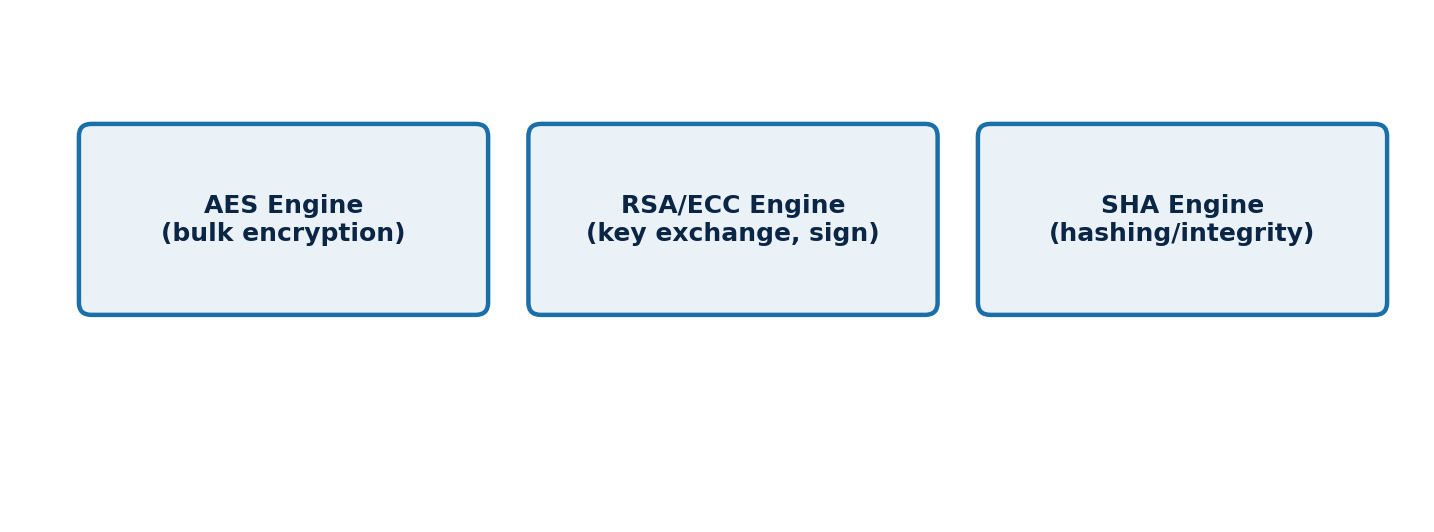
An AES engine accelerates symmetric encryption, used for bulk data protection where the same key encrypts and decrypts data. RSA and ECC (Elliptic Curve Cryptography) engines accelerate asymmetric operations – used for tasks like secure key exchange and digital signatures – which are computationally far more expensive than symmetric operations and benefit enormously from hardware acceleration. SHA engines accelerate cryptographic hashing, used for verifying data integrity and as a building block in many other security protocols.
Why It Matters
Software-only cryptography can become a serious performance and power bottleneck, particularly for high-throughput applications like network encryption or for battery-powered devices performing frequent secure operations. Hardware acceleration removes this bottleneck while typically also improving resistance to certain classes of side-channel attack compared to software implementations.