

What PUFs Involve
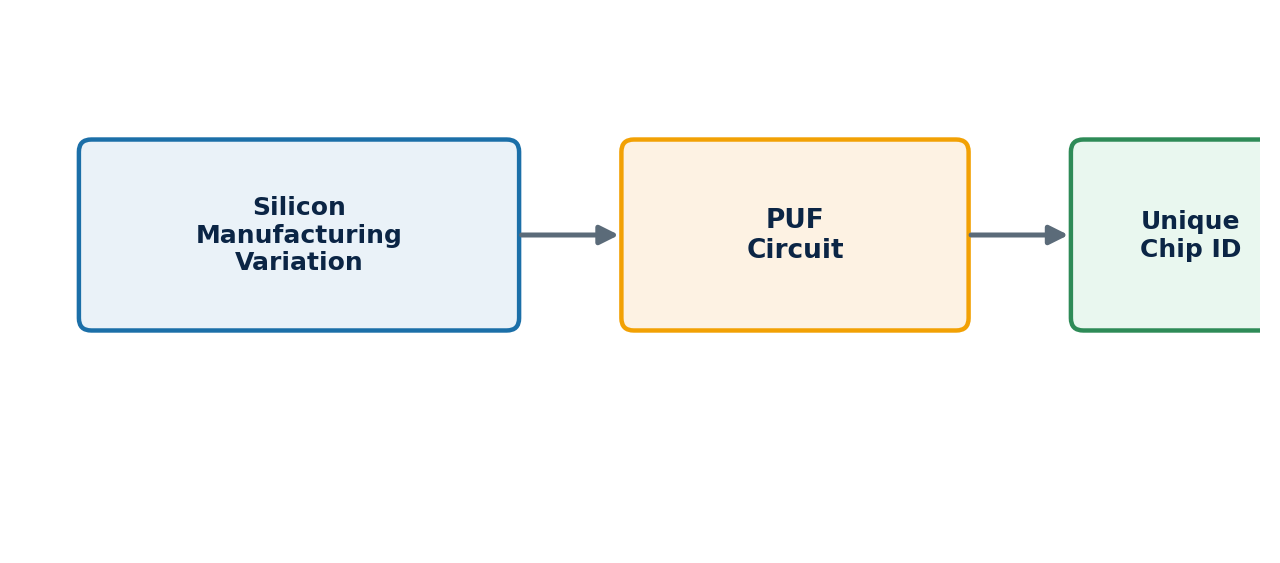
A PUF circuit is designed so that its output depends on subtle, uncontrollable manufacturing variations – such as tiny differences in transistor threshold voltages – that occur naturally during fabrication. Because these variations are effectively random and unique to each physical chip, a PUF produces a consistent, chip-specific 'fingerprint' that can't be predicted in advance or reproduced by cloning the design, even by someone with the original design files.
Why It Matters
PUFs offer a way to give each chip a unique cryptographic identity without needing to store a unique secret key in non-volatile memory during manufacturing – a process that itself creates security and logistics challenges. This makes PUFs valuable for device authentication, anti-counterfeiting, and generating unique keys that never need to be written to storage at all.