

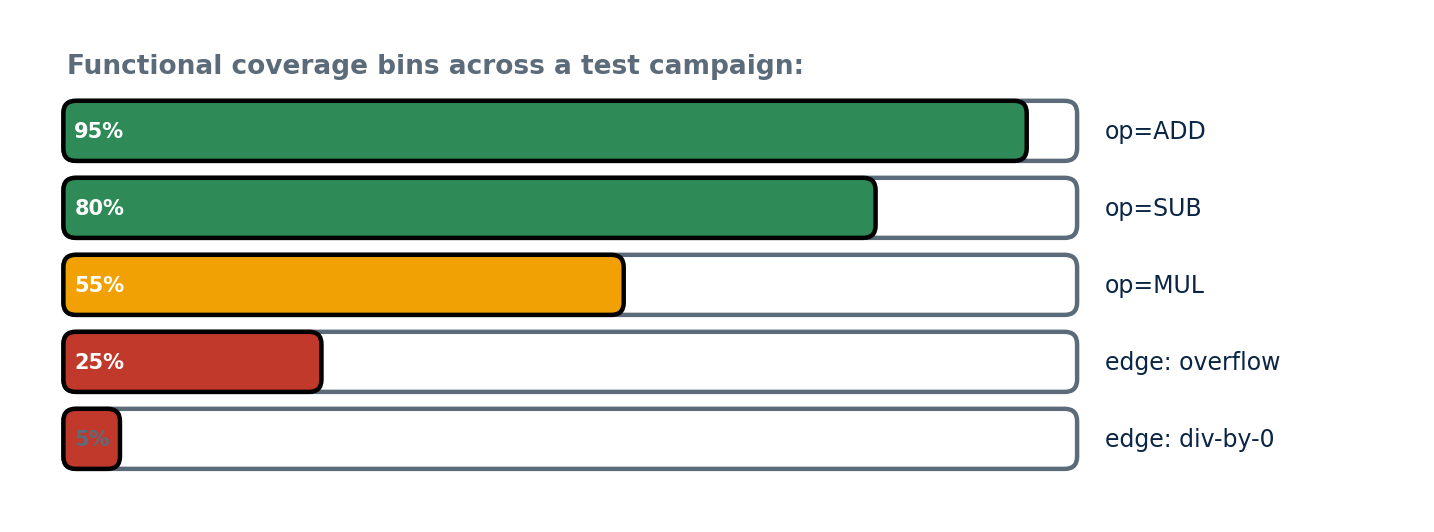
What Functional Coverage Involves
Verification engineers define coverage models – structured descriptions of the scenarios, value combinations, and corner cases that matter for a given design. As tests run, simulation tools automatically track which of these defined 'bins' have been hit. Gaps in coverage highlight untested behavior, guiding engineers to write additional targeted tests or adjust random stimulus generation to reach those gaps.
Why It Matters
Without functional coverage, it's easy to have thousands of passing tests that all happen to exercise the same easy scenarios, while critical edge cases – overflow conditions, rare protocol sequences, error paths – remain completely untested. Coverage closure is one of the primary criteria used to decide a design is actually ready for tape-out.