
What Hybrid Flows Involve
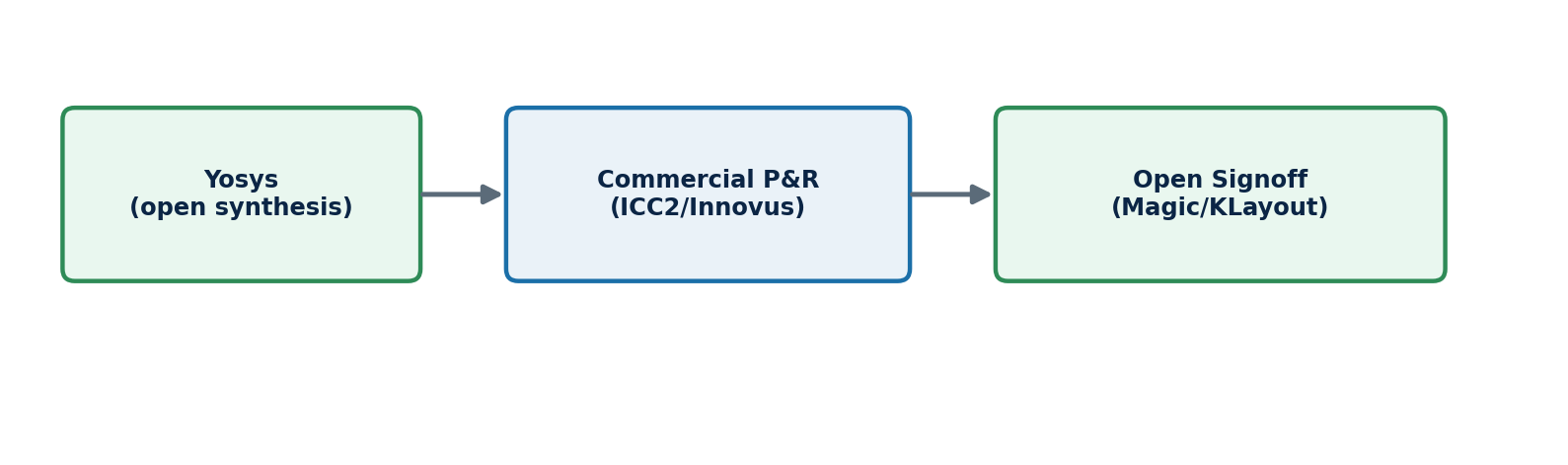
A team might use Yosys, an open-source synthesis tool, to reduce licensing costs for the synthesis step, then hand the resulting netlist to a mature commercial place-and-route tool for the more complex physical implementation stages. Alternatively, a team might complete implementation with commercial tools but perform final signoff verification with open-source tools like Magic or KLayout as an independent cross-check, or to reduce signoff licensing costs.
Why It Matters
Hybrid approaches let teams reduce licensing costs on the stages where open-source tools are mature and reliable, while retaining commercial-grade capability for the stages that most need it. This flexibility can meaningfully reduce total tooling cost without compromising design quality where it matters most.