

What OpenROAD Involves
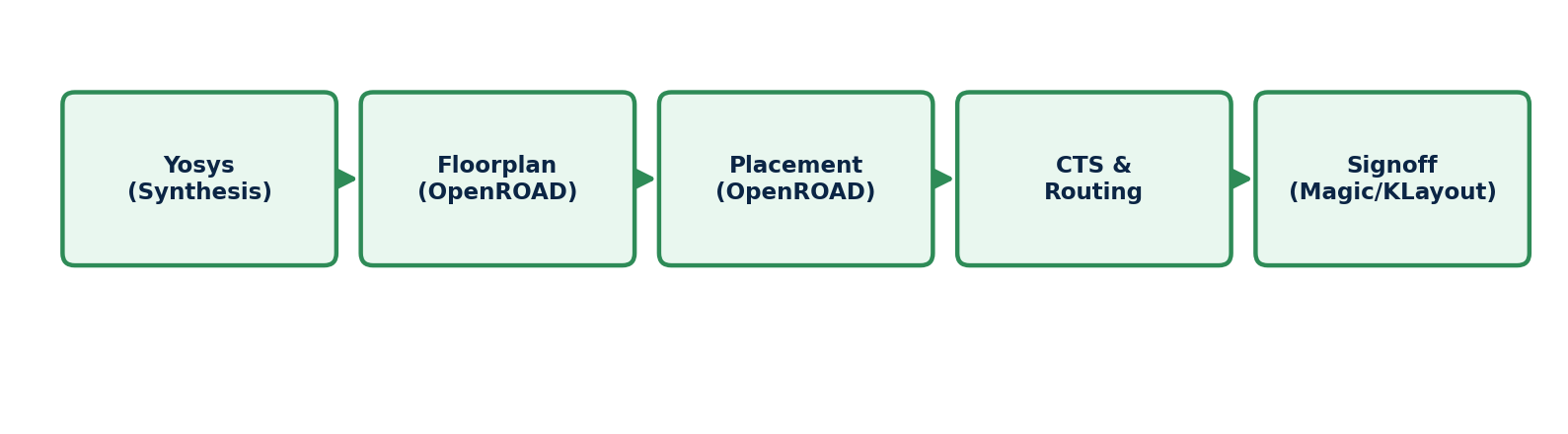
The flow typically begins with Yosys for logic synthesis, converting RTL into a gate-level netlist. OpenROAD itself then handles the physical design steps – floorplanning, placement, clock tree synthesis, and routing – with a strong focus on full automation requiring minimal manual tuning. Final signoff steps, like design rule checking, are handled by open-source tools such as Magic or KLayout, completing a fully open path from RTL to GDSII.
Why It Matters
OpenROAD dramatically lowers the barrier to entry for chip design, making it accessible to academic researchers, hobbyists, and startups who couldn't otherwise afford commercial EDA licenses. It has matured rapidly and is increasingly used for real, production-quality designs on open-source process nodes, not just educational projects.