

What Systolic Arrays Involve
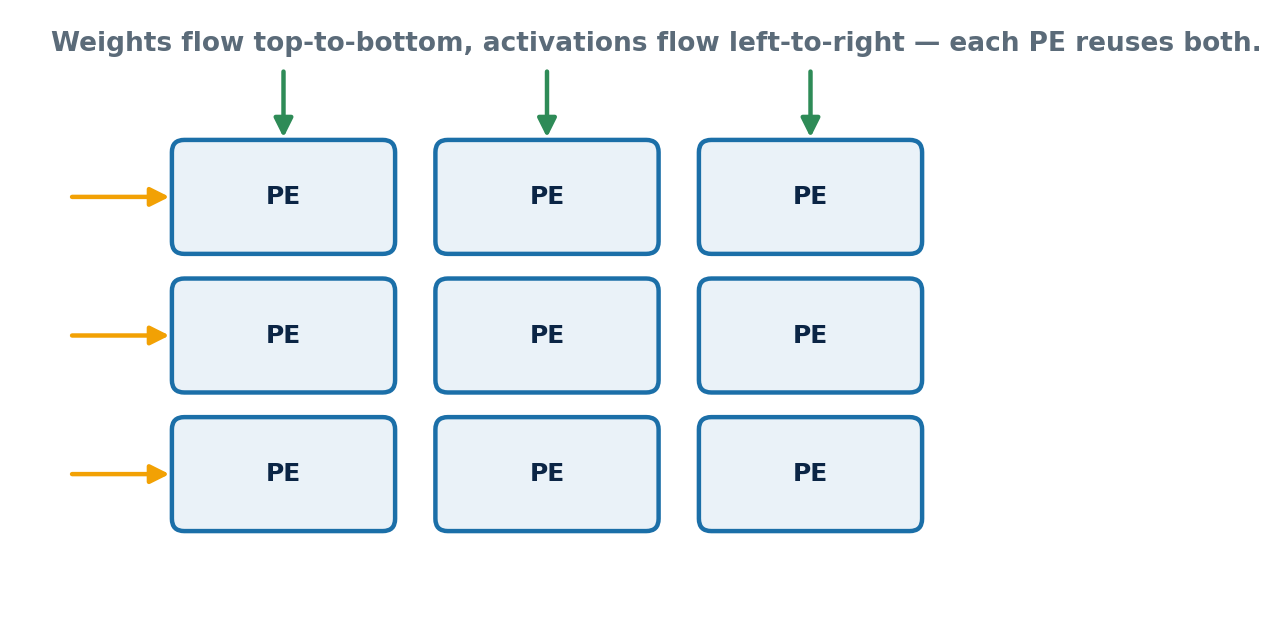
A systolic array is a grid of simple processing elements (PEs), each capable of a multiply-accumulate operation. Data – typically weights and activations – flows through the array in a coordinated, rhythmic pattern (hence 'systolic', like a heartbeat), with each PE passing its inputs to its neighbors every clock cycle. This structure allows each piece of data to be reused across many computations as it moves through the array, dramatically reducing the number of times data needs to be re-fetched from memory.
Why It Matters
By maximizing data reuse within the array itself, systolic architectures minimize the expensive memory accesses that would otherwise dominate both the time and energy cost of neural network computation. This regular structure also scales predictably – larger arrays for more throughput – and is relatively straightforward to verify given its repetitive, well-understood PE structure.