

What CDC Involves
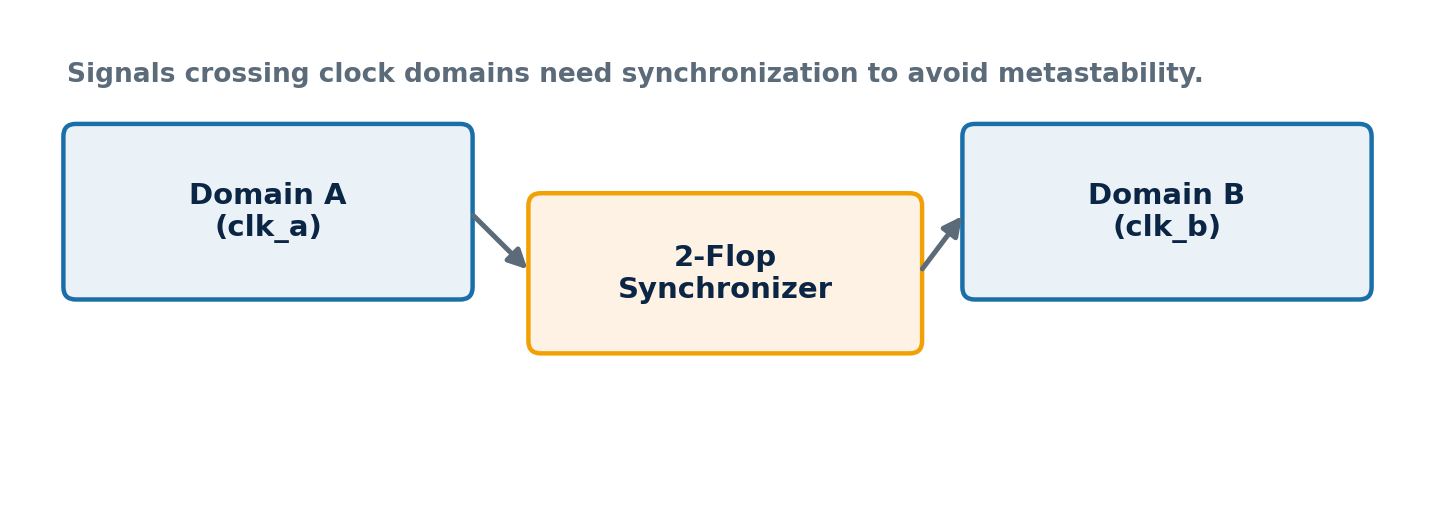
The most common technique is a two-flop (or multi-flop) synchronizer, which gives a signal time to settle before it's used in the new clock domain. Multi-bit buses and FIFOs crossing clock domains need more sophisticated handling, such as Gray-coded pointers, to ensure the whole bus is captured consistently. Static CDC analysis tools automatically scan a design for unsynchronized crossings that could cause metastability.
Why It Matters
CDC bugs are notorious for being intermittent – they may pass simulation and even most lab testing, only to appear rarely in the field under specific timing conditions. This makes them some of the most expensive bugs to find after tape-out, and one of the strongest arguments for rigorous CDC verification before committing to silicon.