

Contact
RTL Design

Finite State Machines: The Backbone of Control Logic

Finite State Machines (FSMs) are the workhorse of digital control logic – they sequence operations, manage protocols, and coordinate handshakes between blocks. Nearly every non-trivial RTL design contains multiple FSMs working together.

VIDYUTT July 24, 2026 2 min read
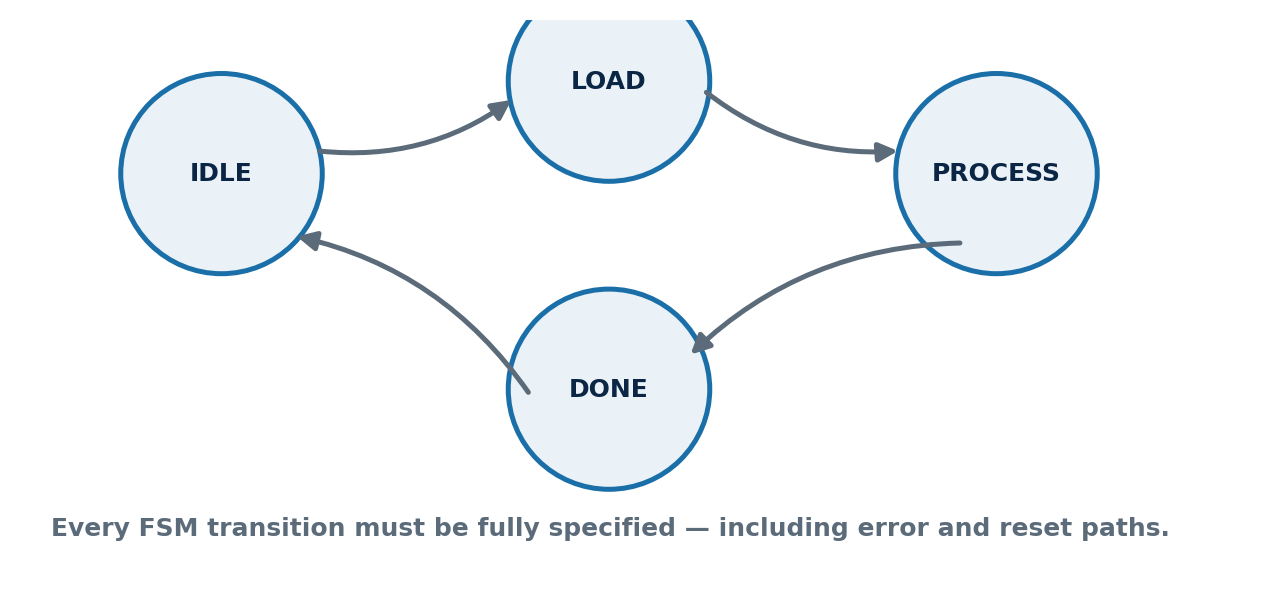
Figure 1: A simple finite state machine – every state and every transition, including error paths, must be explicitly defined.

What FSM Design Involves

An FSM is defined by a set of states, the conditions that trigger transitions between them, and the outputs produced in each state. RTL designers implement FSMs using clocked always blocks (or processes), carefully ensuring every state has a fully defined next-state and output behavior – including states that should rarely or never occur, like error or recovery conditions.

Why It Matters

An incompletely specified FSM is one of the most common sources of unintended latches, undefined behavior, and hard-to-debug lockups. Well-structured FSMs, with every transition accounted for, make a design both easier to verify and easier to debug when something does go wrong in the lab.

Build your idea into silicon.
From RTL to real, packaged chips through the VACS program.
Start Your Silicon Journey