

What Low-Power RTL Involves
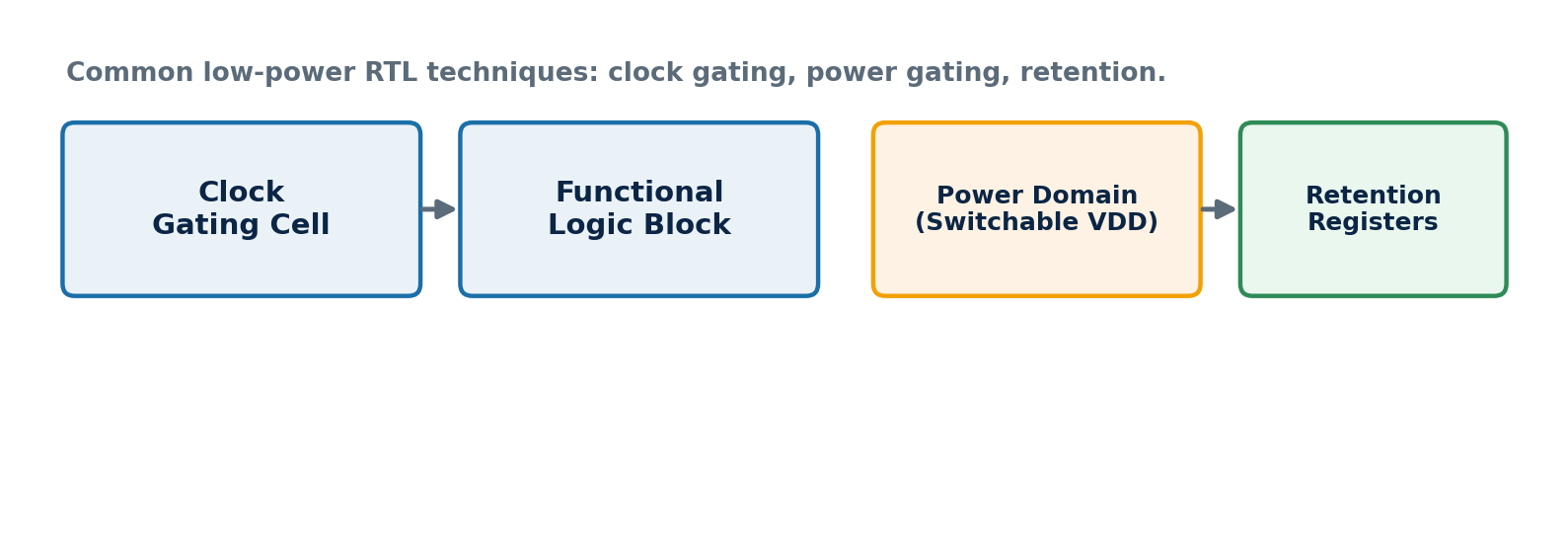
Clock gating disables the clock to idle logic, cutting dynamic power without losing state. Power gating goes further, cutting supply voltage entirely to unused blocks – but requires retention registers to preserve critical state across power-down. RTL designers structure their code to make these techniques easy for synthesis tools to apply automatically, and explicitly describe power intent using standards like UPF (Unified Power Format).
Why It Matters
Power savings applied only during physical implementation are limited compared to power-aware decisions made at the architecture and RTL stage – such as which blocks can be power-gated, and how coarse or fine the power domains should be. RTL-level planning unlocks power savings that can't be recovered later.