

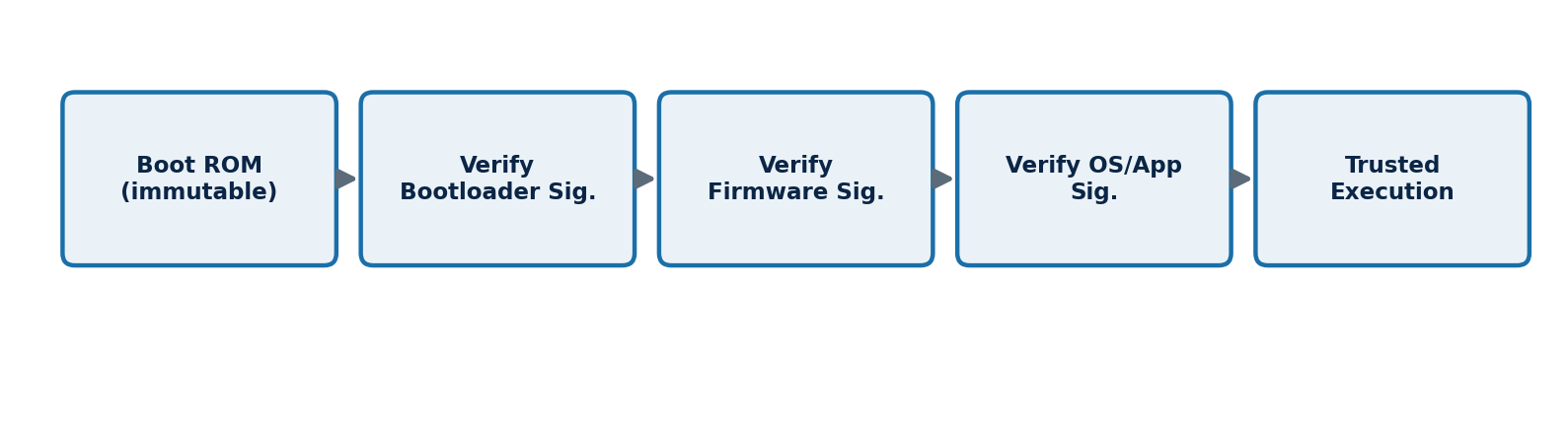
What Secure Boot Involves
The process begins in immutable boot ROM, which cannot be altered after manufacturing. This ROM verifies the cryptographic signature of the next boot stage (typically a bootloader) before allowing it to execute. That bootloader in turn verifies the signature of the firmware or operating system it loads, and so on – forming an unbroken 'chain of trust' where each stage only runs code it has cryptographically confirmed comes from a trusted source.
Why It Matters
Without secure boot, an attacker with physical or remote access to a device could potentially replace its firmware with malicious software, compromising the device entirely. Secure boot closes this attack path by making unauthorized code modification cryptographically detectable and blocking it before it can execute.