
What FPGA-Based Bring-up Involves
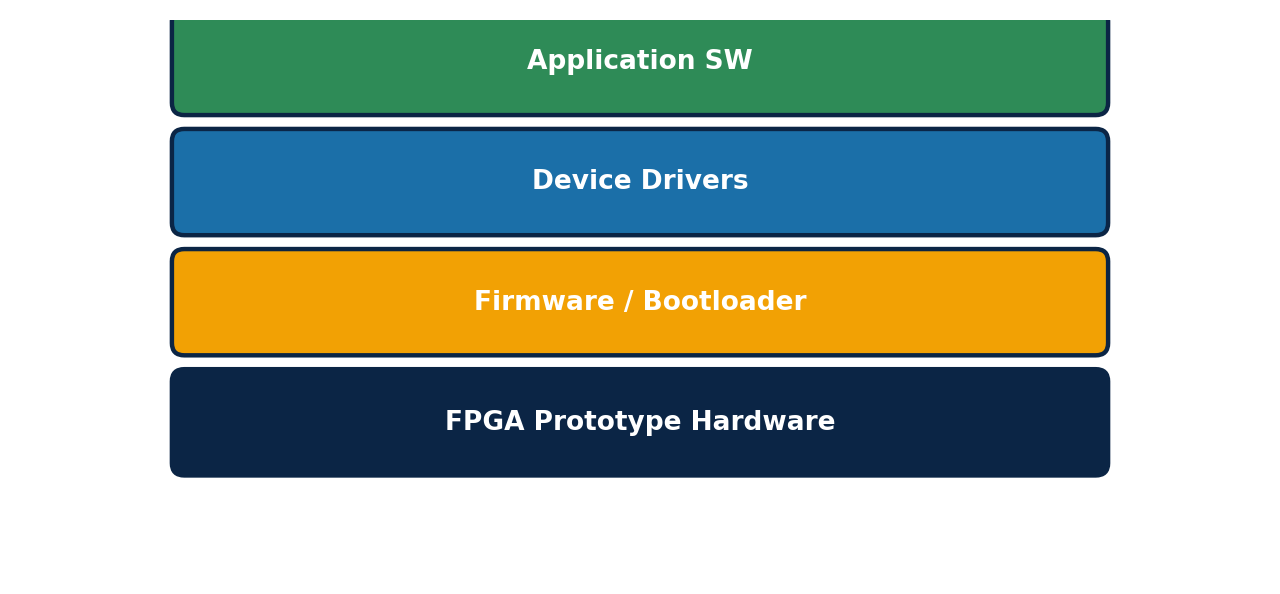
Once a design is running on an FPGA prototype, firmware and bootloader teams can begin bringing up low-level initialization code against real (if slightly slower) hardware. Device driver teams can validate their code against the actual register interfaces and behavior of the design, and application teams can begin integration testing – all in parallel with the final phases of hardware development, rather than waiting for tape-out and silicon return.
Why It Matters
Software bring-up against real hardware behavior, rather than a simulation model or hand-written specification, catches integration issues far earlier than they'd otherwise be found. This parallel development path can compress many months off a product's overall time-to-market.