

What the Comparison Involves
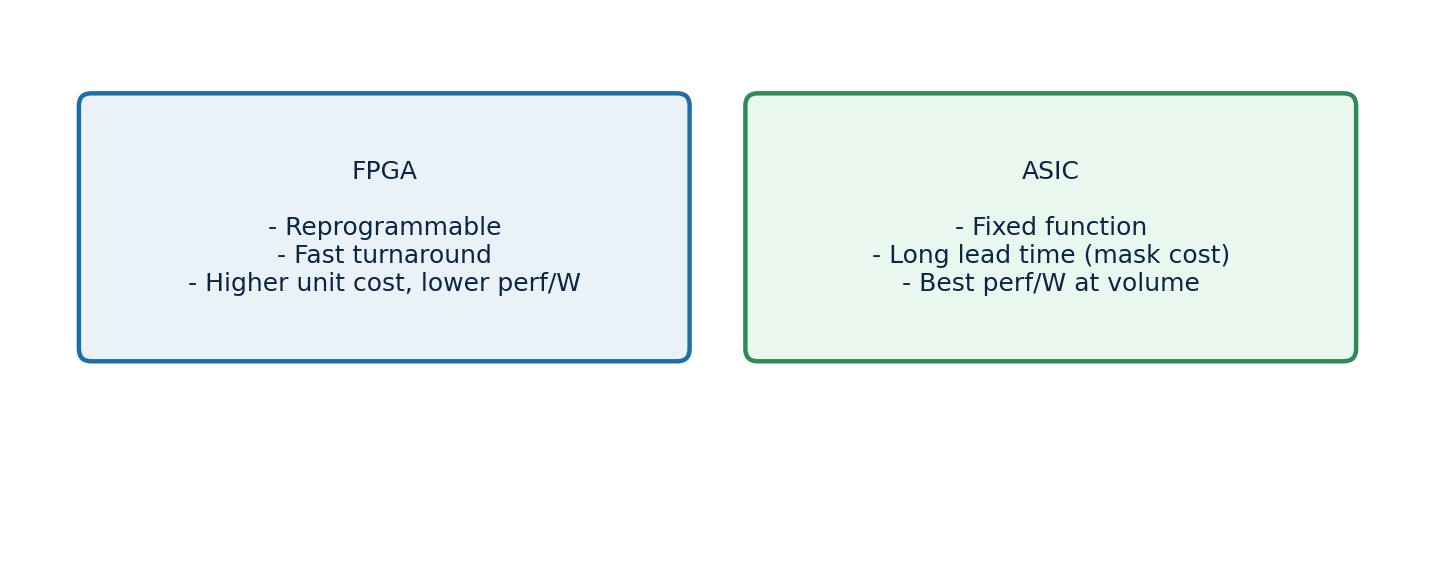
FPGAs are reprogrammable devices that can be reconfigured after manufacturing, offering fast development turnaround at the cost of higher per-unit price and lower performance-per-watt compared to custom silicon. ASICs are fixed-function chips, custom-manufactured for a specific design – they require a longer, more expensive development cycle (including mask costs) but deliver the best possible performance and power efficiency once in production, especially at high volumes.
Why It Matters
Choosing the wrong path can mean either overspending on ASIC development for a low-volume product that would have been cheaper on FPGA, or accepting an FPGA's power and cost penalties for a high-volume product where an ASIC would pay for itself many times over. Many products actually use FPGAs during development and early production, then transition to ASIC once volumes justify the investment.