
What Managing This Transition Involves
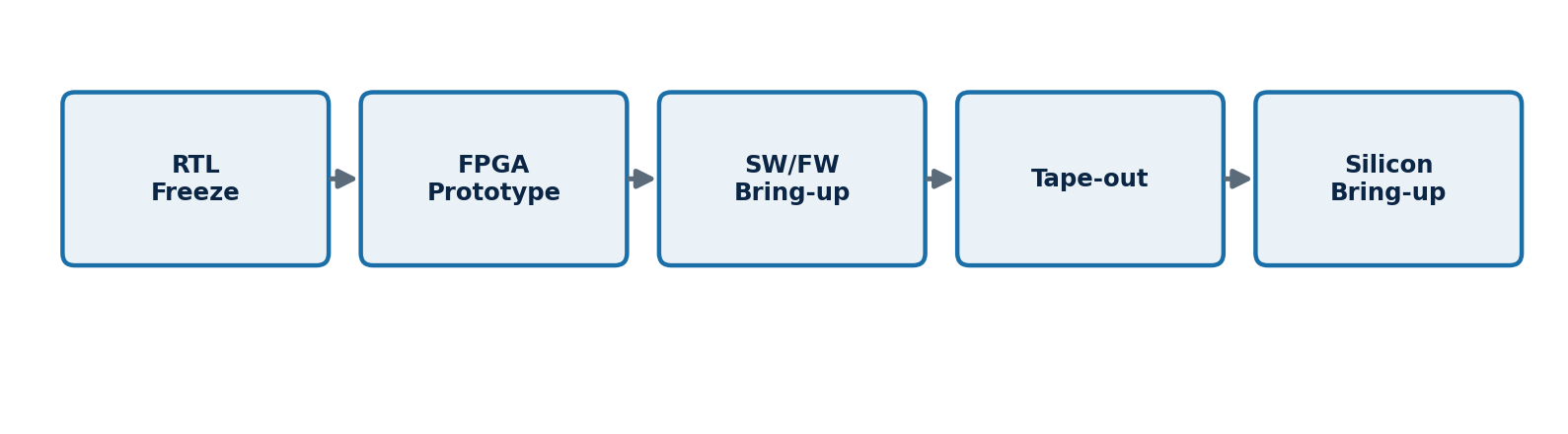
As FPGA-based testing uncovers bugs, fixes are fed back into the same RTL codebase that will eventually go to tape-out, ensuring the prototype and the final chip stay in sync. Once tape-out happens, the same test suites, software stack, and debug infrastructure developed on the FPGA prototype can often be reused – with adjustments – to accelerate silicon bring-up when the real chip returns from the foundry.
Why It Matters
Without disciplined process, a prototype can drift out of sync with the RTL that actually gets taped out, undermining its value. A well-managed transition, by contrast, means the investment in prototype-based testing and software development directly accelerates the riskiest and most time-pressured phase of a project: bringing up real silicon for the first time.