

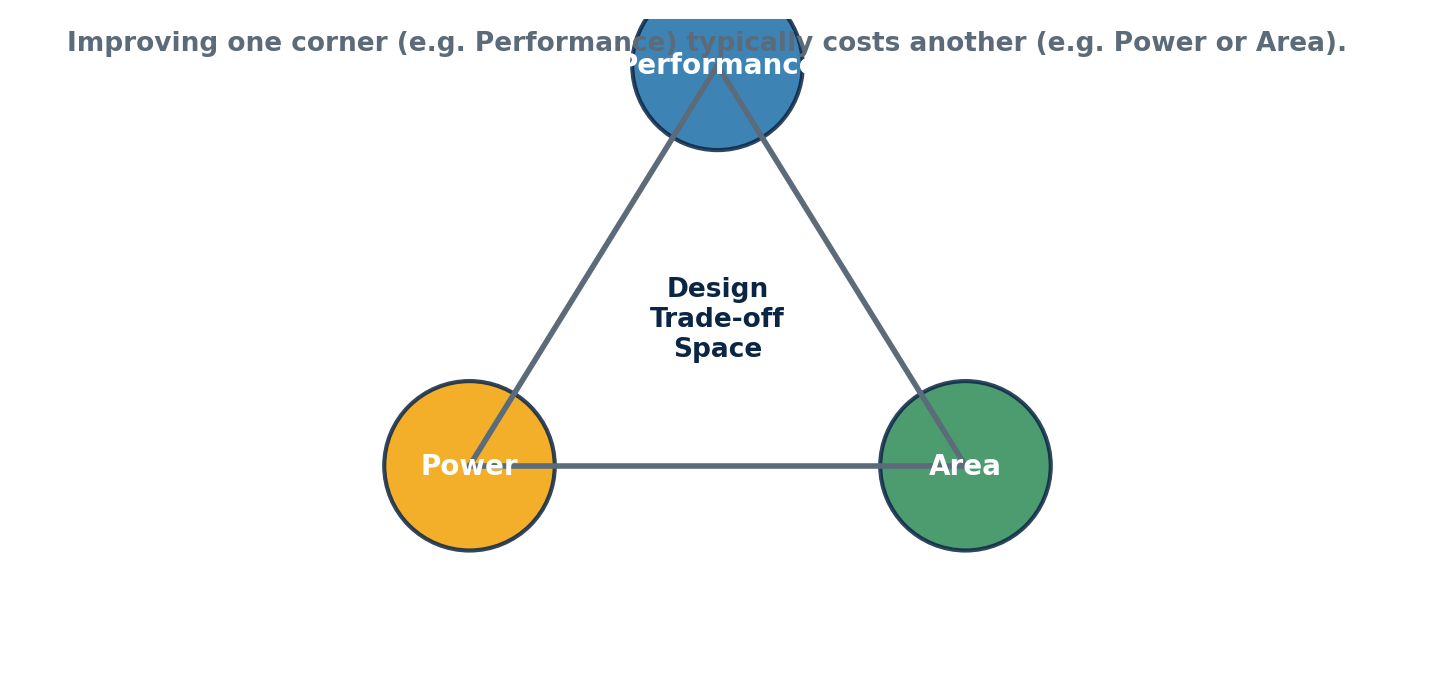
What PPA Trade-offs Involve
Increasing clock frequency (performance) usually raises dynamic power and can require larger, faster cells that consume more area. Shrinking area by using smaller, slower cells often hurts performance. Reducing power through techniques like voltage scaling can slow down critical paths. Architects constantly navigate this three-way tension, guided by the product's actual requirements rather than chasing every axis at once.
Why It Matters
A chip optimized for the wrong corner of this triangle – for example, maximum performance in a battery-powered device – misses the mark on what the product actually needs. Clear PPA targets, set early and revisited throughout the project, keep architecture, RTL, and implementation teams aligned toward the same goal.