

What CTS Involves
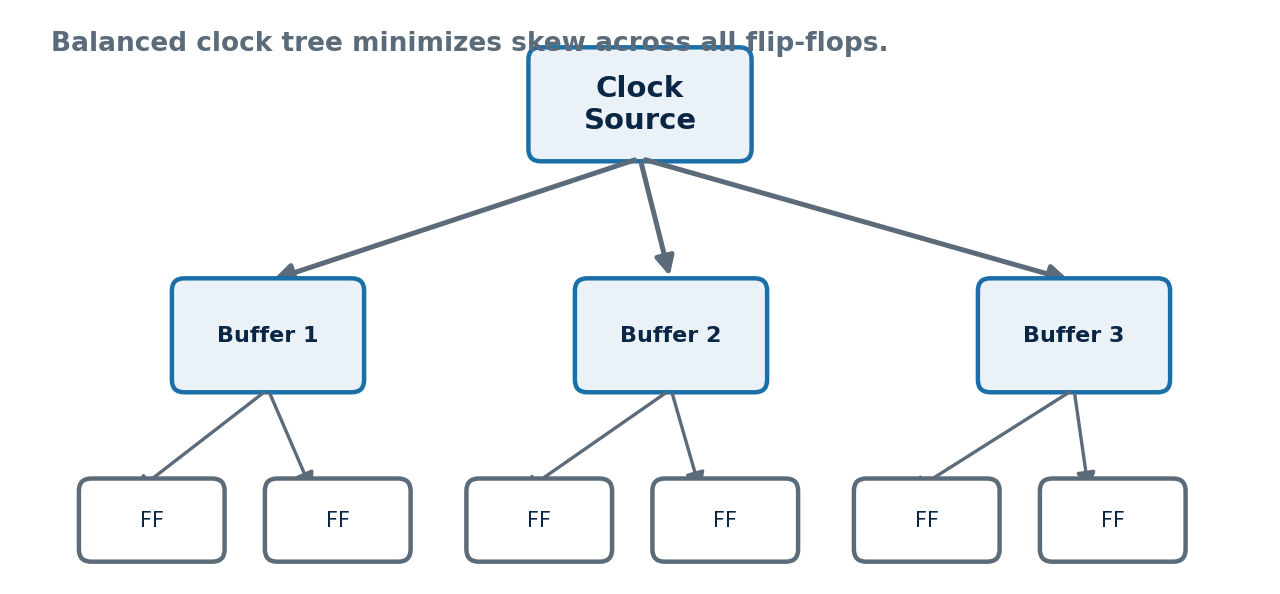
Starting from a single clock source, CTS tools build a balanced tree of clock buffers that fans out to reach every sequential element on the chip. The goal is to minimize clock skew (the difference in arrival time of the clock signal at different flip-flops) and clock latency, while also managing power consumption, since the clock network itself can be one of the largest power consumers on the chip.
Why It Matters
Excessive clock skew directly eats into a design's timing margin, effectively reducing the maximum frequency the chip can run at. A well-built clock tree is essential for meeting aggressive performance targets, and clock network power is often a significant fraction of total chip power – making CTS quality a factor in both speed and power outcomes.