

What DFM Involves
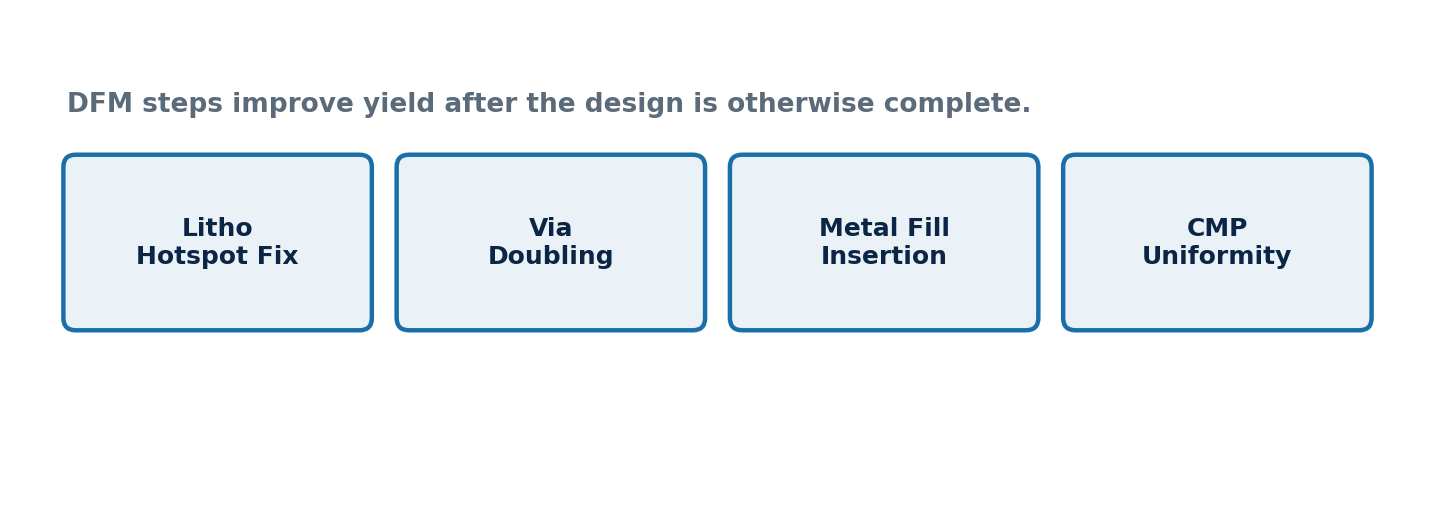
DFM techniques include fixing lithography 'hotspots' – layout patterns statistically more likely to cause manufacturing defects even though they pass basic rules – and adding redundant vias to reduce the risk of a single manufacturing defect causing an open circuit. Metal fill insertion adds dummy metal shapes to improve the uniformity of the chemical-mechanical polishing (CMP) process used in manufacturing, which in turn improves consistency across the wafer.
Why It Matters
At advanced process nodes, yield is increasingly sensitive to subtle layout patterns that basic DRC rules don't fully capture. DFM techniques, applied on top of a rule-clean design, can meaningfully improve the percentage of working chips per wafer – directly affecting the economics of a chip program.