

What STA Involves
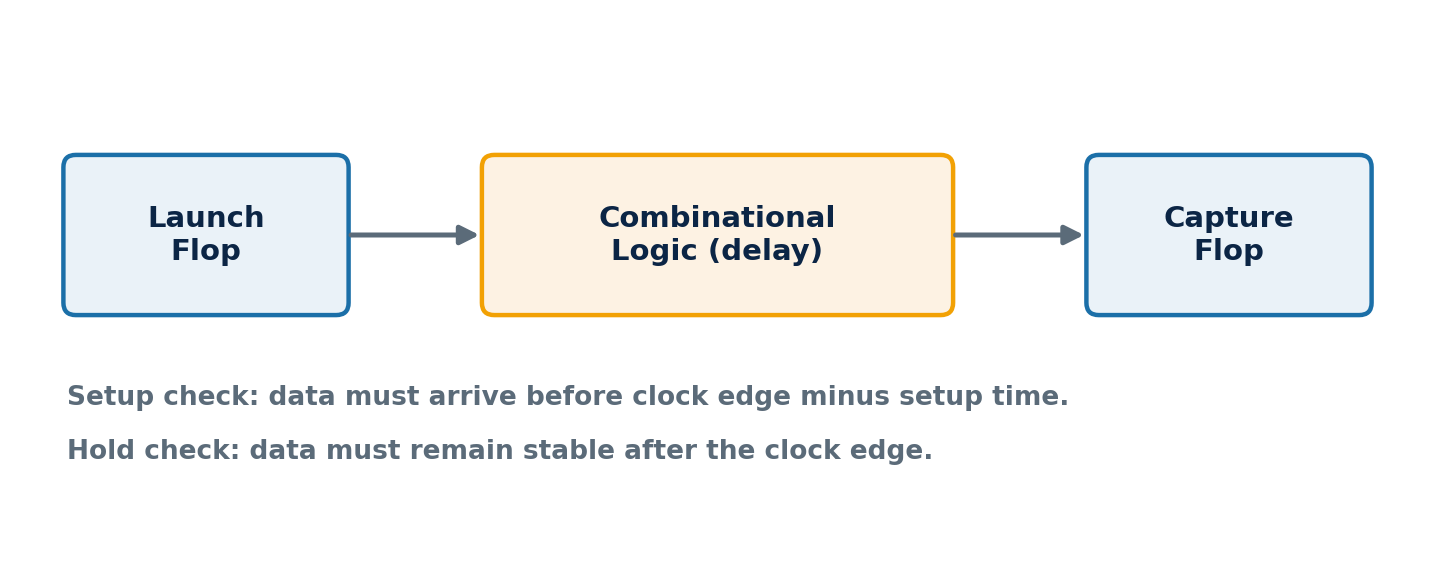
STA tools analyze every path from one flip-flop (or input) to the next, calculating the delay through combinational logic and comparing it against the clock period. A setup check ensures data arrives early enough before the next clock edge; a hold check ensures data doesn't change too soon after the current clock edge. STA covers every possible path in the design, across multiple process, voltage, and temperature conditions, without requiring functional test vectors.
Why It Matters
STA is what actually determines the maximum frequency a chip can reliably run at, and whether it will function correctly across manufacturing variation and operating conditions. Because it checks every path exhaustively rather than only the paths exercised by specific tests, it's the primary signoff method for timing correctness before tape-out.