

What DRC and LVS Involve
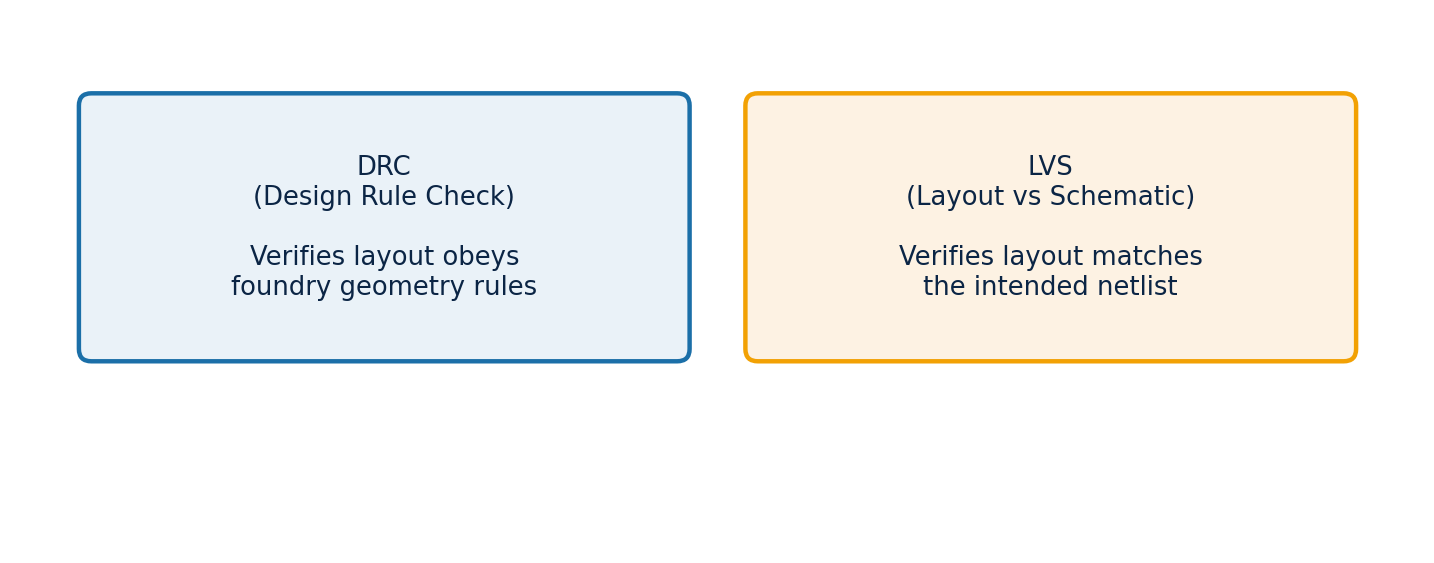
DRC verifies that every shape in the physical layout obeys the foundry's geometric rules – minimum spacing, minimum widths, and hundreds of other constraints that ensure the design can actually be manufactured reliably on a given process. LVS takes a different approach: it extracts a netlist directly from the physical layout and compares it against the intended schematic/netlist, catching any place where the layout doesn't actually implement the circuit it was supposed to.
Why It Matters
A DRC violation can mean a manufacturing defect or reliability failure; an LVS mismatch can mean the chip simply won't function as designed, even if it's perfectly manufacturable. Foundries typically require a fully clean DRC and LVS report before accepting a design for fabrication, making these two checks a hard gate on every tape-out.