

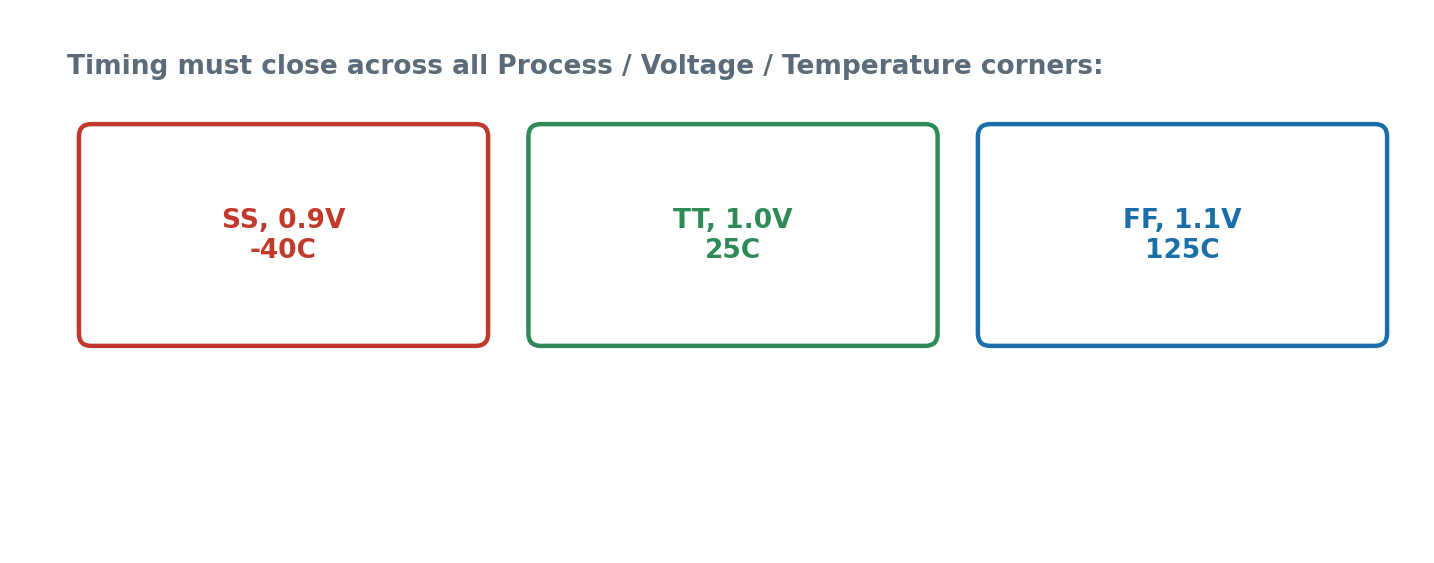
What Multi-Corner Timing Signoff Involves
Chips are analyzed across multiple 'corners' representing combinations of process variation (e.g., slow-slow or fast-fast transistors), supply voltage, and operating temperature. A design must meet setup and hold timing requirements in every one of these corners – a slow, cold, low-voltage corner might be the hardest for setup timing, while a fast, hot, high-voltage corner might be hardest for hold timing.
Why It Matters
Manufacturing variation is unavoidable – no two chips off the same production line are perfectly identical. Signing off timing only at nominal, 'typical' conditions all but guarantees that some fraction of manufactured chips will fail to meet timing once real-world variation and operating conditions are accounted for.